
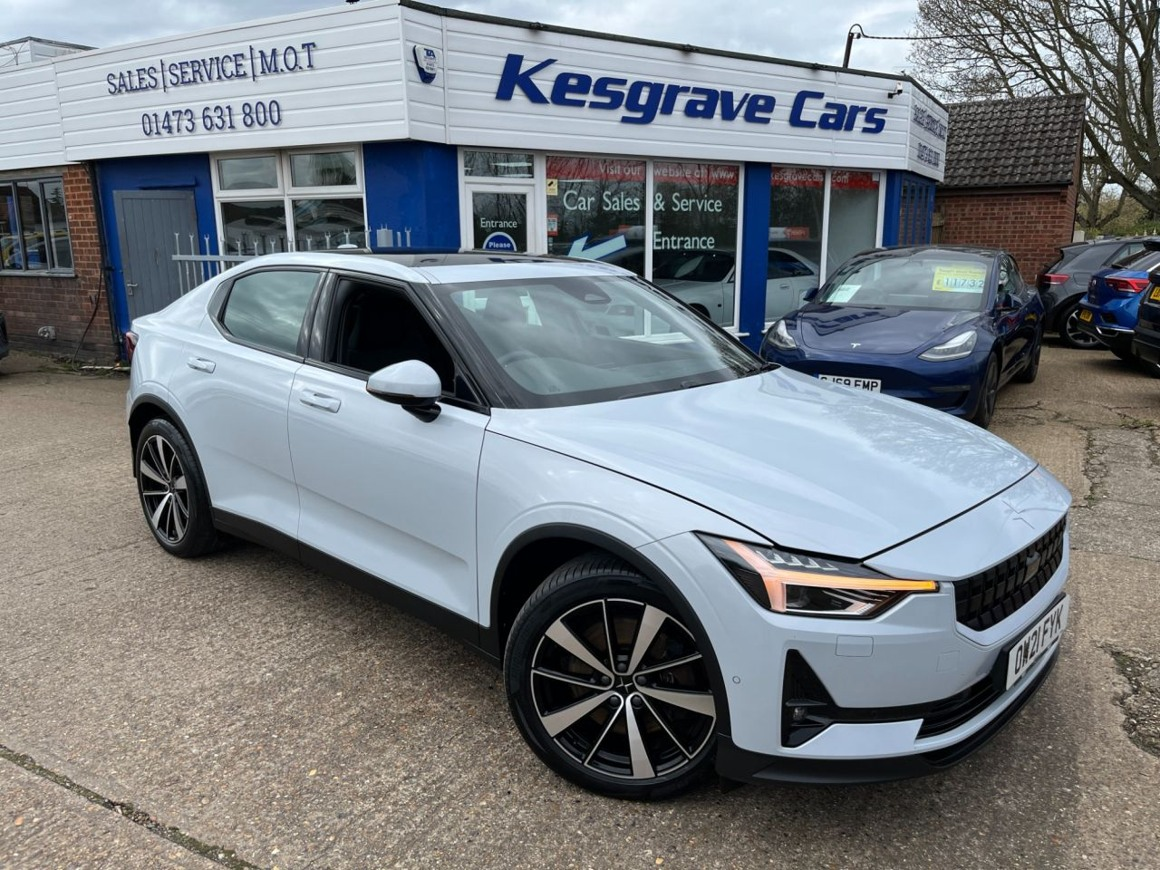
The Polestar 2 combines a low driving position with a liftback opening. Try it with your normal passengers and cargo. The cabin’s shape and center console can feel snug to some drivers, so check elbow room and pedal position during a longer drive rather than deciding from the photographs.
Single-motor and dual-motor cars can differ substantially, and their configurations changed across model years. Verify drivetrain and options from the exact listing or build record. Test navigation, phone connectivity and the cameras. Ask whether the seller can remove the previous owner’s account and help pair the car with yours.
Inspect wheels and tires, and take the car over a surface that reveals unwanted vibration. Ask what charging cable and keys are included and confirm the remaining warranty. The UK dealer image illustrates the model. Use the U.S. vehicle’s own paperwork to assess its equipment.
Spend time in the Polestar cabin
The Polestar 2’s low seating position and prominent center console make it feel quite different from an upright crossover. Try the seat at the height and distance you would use for a long drive. Check whether your knees or elbows rest against hard trim. Then ask a passenger to climb into the back while the driver stays in position. The rear hatch can be useful for a large item, but the opening and the load floor still need to fit your gear. Test those parts of the car before choosing between a single motor and a dual motor listing.
Separate the car from the listing
Use the VIN to reconcile the listing, the car and the paperwork. A dealer’s inventory feed can display a feature that belongs to another package or model year. Start with the equipment you would miss most, such as a camera view, seat adjustment or a particular charging connection. Ask someone to show it working on the vehicle in front of you. If a feature is missing, compare the car with another example at the same total price rather than assuming it can be added later. Record the VIN on every quote so the comparison stays tied to the right car.
Make the test drive repeatable
Ask the dealer to leave enough time for a drive that covers a parking lot, a rough city street and a faster road. Begin with the radio off and the climate fan low. Note where a noise happens rather than trying to diagnose it while driving. A sound that changes with speed deserves a different follow-up from a rattle that appears only on broken pavement. Park at the end and repeat the maneuver with the cameras and mirrors you expect to use. Write down the conditions so a second drive can confirm your impression.
Inspect the expensive wear items
Walk around the vehicle in good light and inspect each tire, including the inner shoulders where visible. Compare the size and type on the sidewalls with the vehicle’s placard and check for a mismatch that needs explanation. Ask the dealer whether any wheels were straightened or refinished and whether there is an alignment report. Inspect the glass and lighting as well. A low purchase price can become less attractive when a set of tires and a damaged wheel need attention together. Request written estimates for any work the seller is leaving to you.
Plan a long trip before you buy
Pick one return trip you actually make, including the colder season if that matters in your area. Choose a charging stop and an alternative in case it is busy or unavailable. Check the connector on the specific car, the networks it can access and whether an approved adapter is needed. Build in enough time for breaks and leave a reserve for a detour. If you can test a charging session with the dealer, watch how the session starts, how the car reports charging progress and how the cable releases. The routine should be manageable without relying on one ideal stop.
Ask for evidence about the battery
A dashboard range estimate is influenced by conditions and recent driving. It can help you notice changes during a drive, but a single reading does not provide a capacity measurement. Ask whether the seller can share a diagnostic report for the VIN, when it was run and what the result measures. Look for service history involving the battery or charging system and ask who completed the work. If the seller cannot supply a battery assessment, consider an inspection by a shop familiar with the model before committing. Keep that cost in mind when comparing similar listings.
Check the handover items
Before taking delivery, ask the dealer to demonstrate both keys, the charge-port release and the controls you will use on the first trip home. Confirm which cables, adapters and manuals are included. Ask how any previous owner account is removed and how you can pair the car with your phone, where applicable. Save the service paperwork and any written promises in one place. Give yourself time to set the charge schedule and practice connecting at home before a busy morning. The best handover leaves you able to park, lock and charge the vehicle without guessing.
Decide which compromises you accept
Finish the comparison by naming the three things you would use every week. Examples include an easy parking maneuver, room for a child seat or a charging stop that fits a regular route. Then write down the one drawback that would bother you even if the price were lower. Revisit that point on a second drive if necessary. A market ranking can explain why a listing might move quickly, but the study cannot tell you whether a particular car has the condition, equipment and service access you need. Keep a second suitable example on your shortlist so you can walk away if a key question stays unanswered.
Use this article responsibly
Model-level commentary is not a live stock offer, a battery test result or destination approval. Request VIN-linked evidence and a dated written quote before buying.
Editorial sources and correction policy · Vehicle evidence and quotation checklist · Source-linked buyer guides