
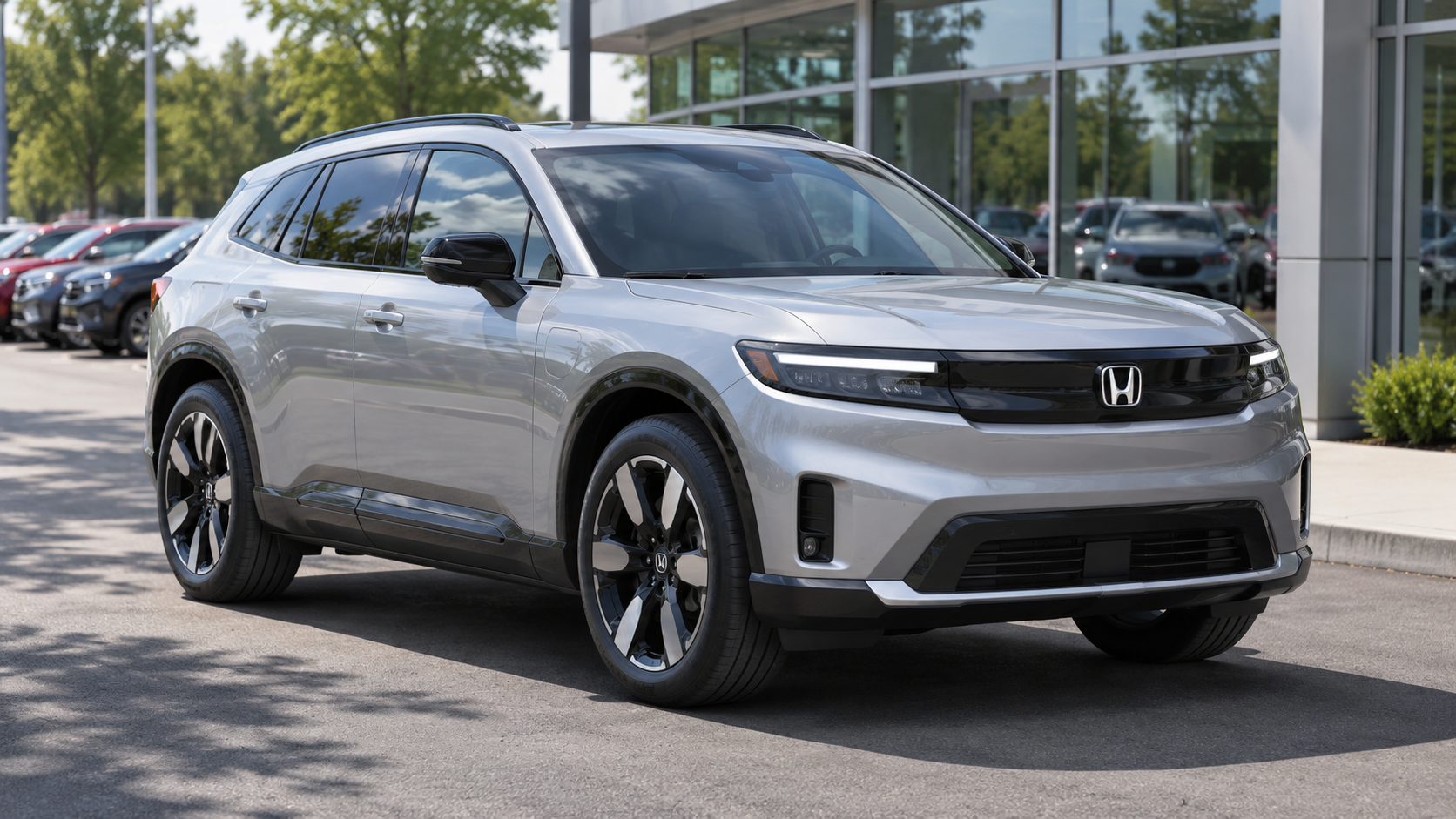
A used Honda Prologue is easiest to evaluate with the people and luggage you actually carry. Put the front seat in your normal driving position and ask a rear passenger to check knee room and entry. Load your usual bags, stroller or sports gear so you can see how much room is left without folding the rear seats.
Compare used listings by trim and drivetrain, and verify which features are fitted to the car on the lot. Test climate control, phone pairing and the parking camera before leaving the dealership. Look for evidence of curb damage or uneven wear on the tires, particularly on cars with larger wheels.
For a home-charging plan, check where the charge port sits relative to your parking space and cable reach. Ask the dealer to show the charge settings and explain which charging equipment is included. Get the warranty start date and any outstanding service work documented in writing.
Try a Prologue with a full load
The Prologue’s cabin is easier to judge with the family in it. A rear seat can appear generous until a child seat is fitted behind the person who needs the most legroom. If the dealer allows it, bring the child seat and luggage you will carry and check how they fit together. Open the hatch in a space with a low ceiling if that is a concern at home. On the drive, check rear ventilation and the view from each seat. Leave time for the person who will drive most often to try the parking controls.
Make the test drive repeatable
Ask the dealer to leave enough time for a drive that covers a parking lot, a rough city street and a faster road. Begin with the radio off and the climate fan low. Note where a noise happens rather than trying to diagnose it while driving. A sound that changes with speed deserves a different follow-up from a rattle that appears only on broken pavement. Park at the end and repeat the maneuver with the cameras and mirrors you expect to use. Write down the conditions so a second drive can confirm your impression.
Work out your charging week
Sketch a normal week before discussing range with the salesperson. Add the miles from work, shopping and any regular evening trips, then mark the nights when the vehicle can actually remain plugged in. If your parking space is shared, check the hours when you can access the charger and whether a session needs to be booked. For a home installation, ask an electrician about the actual parking location and cable route. The question is how much driving you can replenish during your available window. That number gives you a better comparison than a single full-charge range estimate.
Separate the car from the listing
Use the VIN to reconcile the listing, the car and the paperwork. A dealer’s inventory feed can display a feature that belongs to another package or model year. Start with the equipment you would miss most, such as a camera view, seat adjustment or a particular charging connection. Ask someone to show it working on the vehicle in front of you. If a feature is missing, compare the car with another example at the same total price rather than assuming it can be added later. Record the VIN on every quote so the comparison stays tied to the right car.
Inspect the expensive wear items
Walk around the vehicle in good light and inspect each tire, including the inner shoulders where visible. Compare the size and type on the sidewalls with the vehicle’s placard and check for a mismatch that needs explanation. Ask the dealer whether any wheels were straightened or refinished and whether there is an alignment report. Inspect the glass and lighting as well. A low purchase price can become less attractive when a set of tires and a damaged wheel need attention together. Request written estimates for any work the seller is leaving to you.
Review warranty and service access
Request the original in-service date, current mileage and written details of any remaining coverage. Ask which terms apply to the battery and which apply to other components. If the car is advertised as certified, ask for the inspection report and the actual warranty document. Check who can do the work near you and whether any visit requires an appointment well in advance. A service center that is inconvenient to reach can change how you value a cheaper vehicle. Keep the answers with the VIN and ask the dealer to resolve any gaps before you sign.
Check the handover items
Before taking delivery, ask the dealer to demonstrate both keys, the charge-port release and the controls you will use on the first trip home. Confirm which cables, adapters and manuals are included. Ask how any previous owner account is removed and how you can pair the car with your phone, where applicable. Save the service paperwork and any written promises in one place. Give yourself time to set the charge schedule and practice connecting at home before a busy morning. The best handover leaves you able to park, lock and charge the vehicle without guessing.
Compare written prices on equal terms
Request a written out-the-door quote before comparing cars. Ask for the vehicle price, dealer charges, optional products and taxes as separate lines. A quote that bundles a service plan or financing incentive may look attractive until you compare the same purchase terms. Keep a separate allowance for known expenses such as tires, a spare key, charging equipment or a pre-purchase inspection. Write down what the seller has agreed to fix and when. Two examples with similar advertised prices can leave you with different immediate costs, and those differences are easier to see on one page.
Use this article responsibly
Model-level commentary is not a live stock offer, a battery test result or destination approval. Request VIN-linked evidence and a dated written quote before buying.
Editorial sources and correction policy · Vehicle evidence and quotation checklist · Source-linked buyer guides