
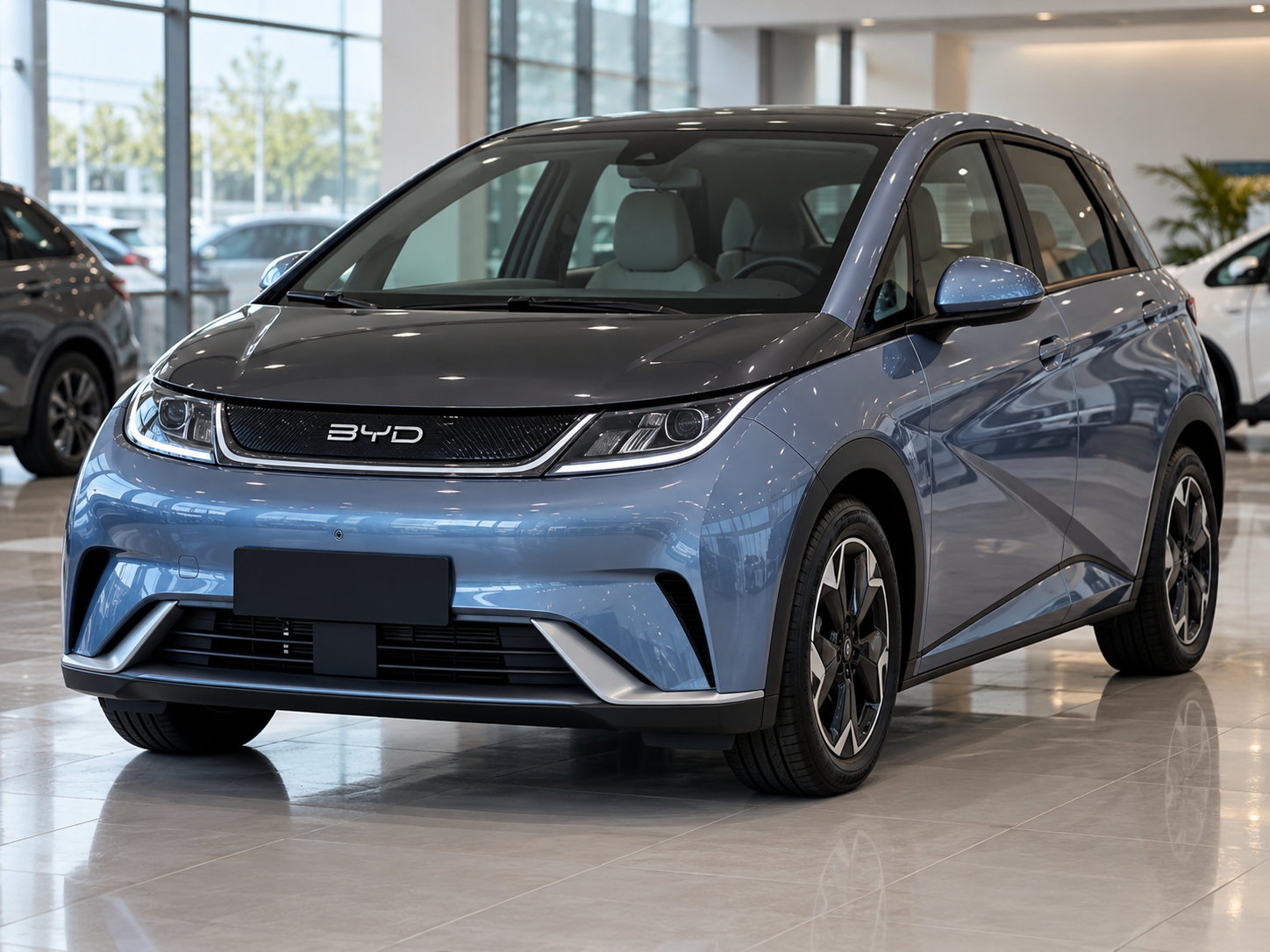
Why this model deserves attention
In the international second-hand electric vehicle trade, the BYD Dolphin presents a distinct proposition for families and urban buyers moving from combustion hatchbacks. Its key selling points include good cabin packaging, recognizable branding and usable everyday range. Although demand can vary sharply between destinations, dealers looking beyond established combustion-engine models increasingly need vehicles that combine a persuasive showroom story with a practical ownership proposition. The Dolphin fits between the cheapest mini EVs and larger crossovers, making it a useful mid-price showroom product.
A used BYD Dolphin also allows distributors to introduce buyers to a modern electric vehicle without necessarily matching the price of a brand-new example. The right comparison is not simply the lowest asking price: importers must consider remaining battery life, equipment, local taxes, shipping and ongoing service. A car that is inexpensive in China can become uncompetitive after port charges, compliance modifications or an unavailable replacement part.
Design, cabin and everyday ownership
The BYD Dolphin should be evaluated as a complete ownership package. Take detailed photos of both exterior sides, the nose, tail, cabin, dashboard, infotainment screen, charging inlets and the tire sidewalls. Check that paint finish and panel gaps are consistent and that interior wear matches the stated mileage. For showroom marketing, combine a clear three-quarter vehicle image with close-ups that document the actual unit rather than generic brochure renders.
Prospective customers will ask about comfort, winter and summer energy consumption, charging times and real-world range. Publish factory range claims only with the correct testing standard—CLTC, WLTP or another cycle—and explain that used-battery condition, temperature, speed, road gradient and accessory use influence achievable distance. Avoid presenting test-cycle range as a guaranteed real-world result.
Used-vehicle inspection: what professional buyers should verify
A pre-purchase inspection should prioritize actual battery capacity, service history, prior collision repair and infotainment language. Request a VIN-based specification sheet, registration chronology, accident and water-damage checks, underbody photos, an independent diagnostic scan and a high-voltage battery health assessment. Where feasible, conduct an AC charging test and a DC charging test with documented start and finish states of charge.
The supplier should document odometer readings, repair history, key count, tire date codes, brake condition, 12-volt system health and any dashboard warnings. Battery state of health should be supported by a dated diagnostic report rather than a seller estimate. Check whether recalled components or software campaigns remain outstanding. For connected vehicles, test infotainment languages, navigation, smartphone integration and over-the-air update access in the destination region.
Export opportunity and target customers
Commercial discussions may begin with Latin America, the Middle East and markets already familiar with BYD. However, geographic suitability must be validated for every model configuration. A buyer should map the local charging standard, driving-side regulations, customs classification, age restrictions, environmental requirements, tariffs, type approval and the availability of qualified service technicians before putting a vehicle into retail inventory.
Wholesale importers should build landed-cost comparisons with purchase cost, inspection, inland transport, export handling, ocean freight, insurance, duties, VAT or sales tax, destination clearing, homologation, reconditioning and warranty reserve shown separately. The cheapest supplier quote is rarely a sufficient purchasing decision. For a first shipment, a small mixed-model pilot can reveal which vehicles customers actually request and which vehicles are expensive to maintain.
How to source the right example
When sending a request for quotation for the BYD Dolphin, specify preferred production years, trim versions, mileage ceiling, battery health threshold, body color, steering configuration, charge-port standard and target port. Ask for multiple VIN-specific offers rather than a generic model price. Agree in writing on inspection rights, damage-disclosure standards, payment milestones, dispute rules, export documents and delivery terms before arranging payment.
Request a full photo set of the exact VIN: front/rear, both sides, roof, wheels, underbody, charging socket, cabin seats, display with odometer and battery diagnostic screen. Verify any promised original battery warranty can legally transfer to a new owner and remain valid outside China. Spare parts and software support should be confirmed with actual local providers rather than assumed from brand reputation.
Conclusion
The used BYD Dolphin can serve a valuable role in a carefully selected 2026 export portfolio. Strong marketing begins with transparent, vehicle-specific information rather than broad claims about price or range. Dealers who prioritize battery diagnostics, documentary evidence, destination compliance and aftersales preparation will be better positioned to turn initial inquiries into repeat orders.