
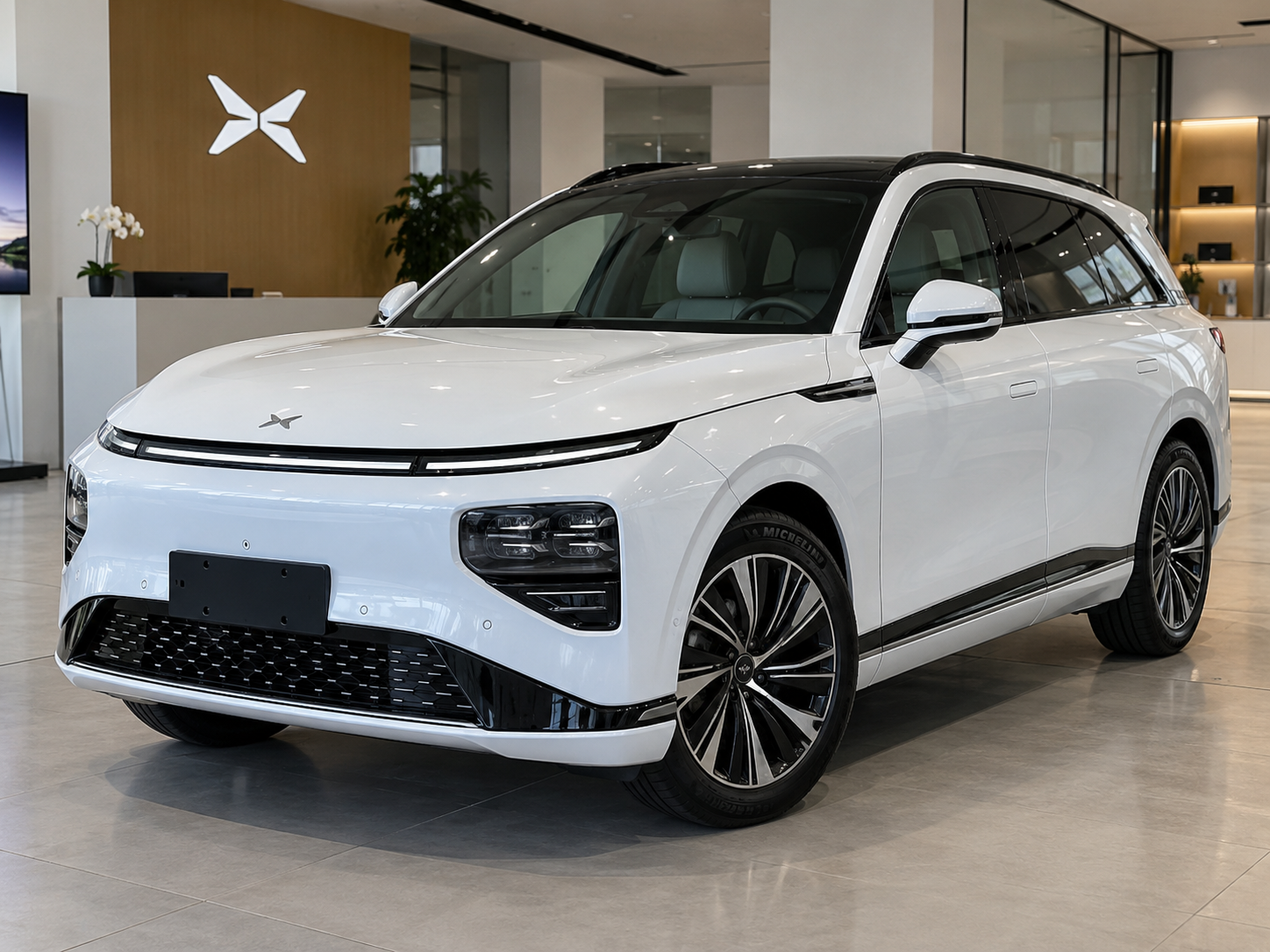
Why this model is attracting attention
The XPENG G9 deserves attention in the second-hand EV market because it provides a recognizable product proposition at a lower acquisition cost than many new electric vehicles. For international used-car businesses, however, brand recognition alone does not guarantee fast stock rotation. Buyers compare the full landed cost, local charging access, insurance, after-sales support, warranty eligibility and resale confidence. That means selecting the right version of a XPENG G9 matters as much as selecting the model itself.
The most realistic buyers are in european premium importers and selected gulf-market buyers. Dealerships should validate local demand using recent completed transactions rather than advertised prices alone. In markets still developing their EV ecosystem, documented battery health and a verified service pathway may overcome objections more effectively than a long list of screen-based features.
Specification and driving experience
Configuration overview: Battery, motor output and charging architecture are year-, version- and region-specific. Buyers must not treat one brochure figure as universal: battery usable capacity, charging peak, certified range, tire size and motor power can change significantly between model years, trims and country specifications. Ask for a VIN-level configuration report, detailed photos of the instrument cluster and charging port, and the relevant vehicle registration documents before accepting any advertised specification.
For everyday driving, the appeal of the XPENG G9 is the combination of quiet propulsion, instant torque and lower routine mechanical complexity compared with combustion vehicles. A proper demonstration should show how the vehicle performs in realistic conditions: urban stop-and-go traffic, highway speeds, air-conditioning use, regenerative braking and repeated DC-charge sessions. Real-world range is affected by temperature, speed, gradient, tire condition and battery aging.
What buyers should inspect on a used example
Top priorities: 800V-capable hardware by variant, ADAS limitations, software language, connected services and parts availability. Commission an independent condition report that includes battery state of health where verifiable, high-voltage fault scanning, AC/DC charging checks, underbody and pack-case inspection, tire/brake condition, accident/paint assessment and checks against manufacturer recalls. A dashboard range estimate alone is not a battery-health test.
Importers should request photos of the VIN plate, front and rear corners, both sides, dashboard with mileage, battery diagnostics, charging-port close-ups, underbody and cabin. Cross-check VIN, ownership chain, financing/liens, mileage records and export documentation. Before an international sale, confirm whether any manufacturer account, connected service or warranty can transfer to the destination market.
Second-hand market outlook and pricing strategy
The XPENG G9 can appeal to buyers trading down from a new EV purchase or upgrading from an older model. The strongest stock is not necessarily the cheapest: well-documented, accident-free cars with a clear battery report and proven charging capability can support faster decision-making and fewer post-sale disputes. Retailers should separate entry trims from long-range and performance versions rather than mixing them in one price comparison.
Set an acquisition ceiling using the expected local retail price minus freight, marine insurance, duties and VAT or other taxes, port and clearance fees, inspection/certification expenses, repairs, distribution margin and an exchange-rate contingency. Because prices move weekly and depend on mileage and vehicle condition, no single universal used-price quote is presented here. Check comparable live listings and completed sales for the exact model year and trim before publication.
Export suitability and distributor checklist
For GEVS and other cross-border wholesalers, XPENG G9 inventory should be offered only after checking local import rules for used passenger cars, homologation or type approval, safety/emissions-equivalent rules where applicable, the charging connector standard and the availability of local battery/high-voltage service. Chinese-domestic-market vehicles may differ materially from European or other export-spec versions in software, telematics, navigation, language, eSIM support and warranty terms.
A professional listing should provide an actual vehicle photo set; year and trim; mileage and VIN (handled securely); motor and battery configuration confirmed against documents; test results; cosmetic grading; charging standard; title and export eligibility; price basis (EXW/FOB/CIF); and the buyer’s responsibility for destination-country clearance. Never promise registration or software conversion without written confirmation from qualified local partners.
Verdict
The XPENG G9 is worth evaluating for a 2026 used-EV sourcing pipeline, but purchase decisions should be driven by documented unit-level quality, local service support and a conservative landed-cost calculation. When sellers pair real dealership photography with independently verifiable records, the model can be marketed with more credibility to retail buyers and fleet/distribution partners.